

The History of Split

FOLLOW! 


Ancient Split
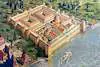
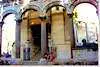
Aspalathos was the name of the ancient Greek settlement from which modern Split grew. It later became Spalatum under the Romans but it remained small until Emperor Diocletian built his luxurious palace there around 300 AD. After his death, expelled Roman emperors made Diocletian's Palace their home away from home but when Avars and Slavs conquered Salona (now Solin) in 614 AD its displaced citizens fled to Diocletian's palace for shelter and a new town was born. The new population set about altering the palace to suit their own housing needs which is what gives Split sightseeing its special flavour.
From Byzantine to Croatian
Split fell under the control of the Byzantine emperors from the 9th century, around the time when great Slavic migrations were increasing the population. More housing sprang up in Diocletian's Palace and the growing population began spreading out to the suburbs. Churches were built in and around the town and new settlements grew around the churches. Meanwhile, a solidly Croatian national identity emerged and in 1069 AD King Kresimir IV annexed Split to Croatia. In 1105 it acknowledged the rule of the Hungarian-Croatian kings while keeping its own autonomy. Trade expanded in the 12th and 13th centuries bringing much prosperity. Emperor Diocletian's mausoleum became a cathedral and more local housing was constructed.
The Venetians in Split
By the beginning of the 15th century, the Venetians were extending their rule throughout Dalmatia and in 1420 Split lost its autonomy and was forced to acknowledge the protectorate of Venice. The Venetians were preoccupied with the security of its new possession and expended considerable effort to fortifying the town. They also built new residences in late Flamboyant Venetian Gothic style.
In the 15th century Split became an important cultural centre, producing such artists as Juraj Dalmatinac who brought Renaissance style to Croatia. The 15th century was also when many humanists and writers gravitated to Split. The greatest was Croatia's most significant poet, Marko Marulic, the first to write eloquently in both Latin and Croatian.
The Ottoman Threat
Like the rest of Dalmatia, Split was threatened by the Ottoman Turks in the 16th century. In the middle of the 17th century when the Turks reached the walls of Split, massive bastions were constructed, creating a star-shaped perimeter of safety. Within the walls, local and foreign artisans were busy building in the new baroque style and the cultural life of the town continued.
Austrians--French--Austrians
After four centuries of Venetian rule, Split passed to the Austrians from 1797 to 1805, followed by seven years of French presence. Under Napoleon, many city walls and fortifications were demolished but a coastal road was built, public lighting was implemented and other improvements made. The fall of Napoleon entailed renewed Austrian control of Split and the rest of Dalmatia, a rule that lasted until 1918.
During the later half of the 19th century, Split saw an economic revival and by the beginning of the 20th century it became the region's most important port. Between WWI and WWII Split expanded outwards to include the southern slopes of Marjan hill and Bacvice in the east.
Italian bombardments of Split in 1941 marked the beginning of the Fascist occupation of Split which lasted until 1943 when Italy capitulated.
Further Resources
Related Pages
Compare car rentals |

 Split Travel Planner
 Diocletian's Palace
 Croatian History
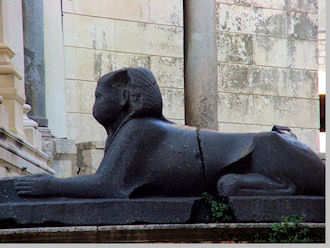 From Sphinxes. . .
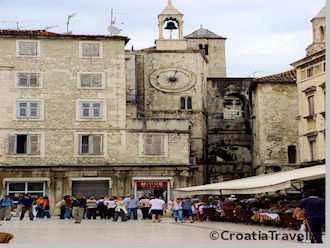 . . .to the 15th century
Join the Croatia Traveller Group
Recommended Experiences
©CroatiaTraveller 2005-2024 All rights reserved
